
Introduction
Warm white recessed spotlights have moved from a design detail to a core part of residential and hospitality lighting in Europe. Homeowners, installers, and lighting planners in Germany and the Netherlands now expect flexible color temperature, stable dimming, and high visual comfort as standard, not as an upgrade. At the same time, energy regulations, sustainability targets, and user demand for a “cosy but efficient” atmosphere are pushing brands to refine 2700K, 3000K and dim‑to‑warm recessed solutions for long‑term projects.
Across new builds and renovations, the market has clearly shifted away from fixed halogen or basic LED and towards switchable CCT and advanced dim‑to‑warm technology. Installers in Germany and the Netherlands now look for spotlights that can handle diverse scenes in one room, from task lighting to relaxed evenings, while still meeting strict EU eco‑design rules. This article examines how 2700K, 3000K and dim‑to‑warm recessed spotlights are reshaping lighting practice, what product features matter most, and how manufacturers like Radians Lighting position themselves in this fast‑moving segment.
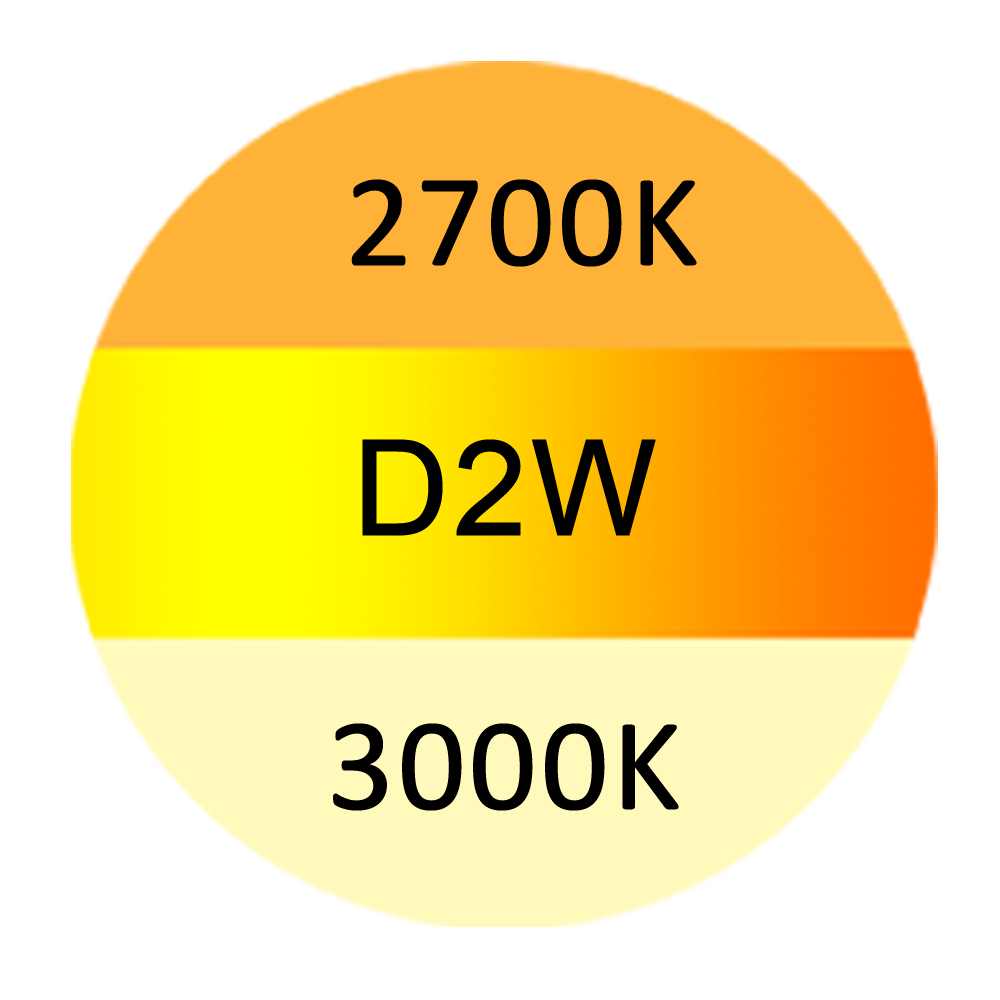
Understanding 2700K and 3000K in Recessed Spotlights
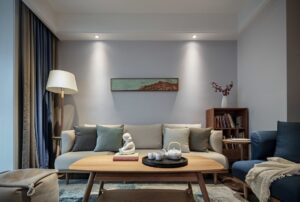
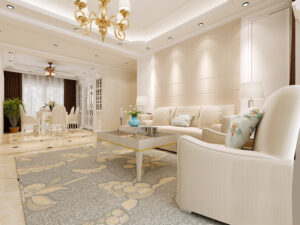
Color temperature describes how warm or cool white light appears and is measured in Kelvin (K). 2700K is close to traditional incandescent light and creates a very cosy feel in homes, restaurants, and hotel lounges in Germany and the Netherlands. 3000K is still warm but feels a bit cleaner and is widely used in modern living rooms, corridors, and small offices where people want comfort with a more contemporary look. Because these two color points are so popular, many European recessed downlights and spots are now offered in both 2700K and 3000K options, or with tri‑colour switches that include them. In practice, installers often choose 2700K for bedrooms and lounges and 3000K for kitchens, hallways, and reception areas to keep a consistent but slightly brighter feel in circulation zones.Typical applications of 2700K and 3000K
In Dutch and German homes, 2700K is often preferred where people relax for longer periods, such as living rooms and dining areas. 3000K suits spaces where surfaces need to look clean and fresh, like modern kitchens, staircases, and bathrooms with suitable IP‑rated recessed downlights. Retail and hospitality designers in both markets also use 2700K to highlight warm materials such as wood, leather, and natural fabrics, because it enhances red and yellow tones. 3000K is chosen for fashion shops and lobbies where merchandise or finishes should appear crisp but still inviting, avoiding the harsh feel of very cool white.Why Dim to Warm Recessed Spotlights Matter
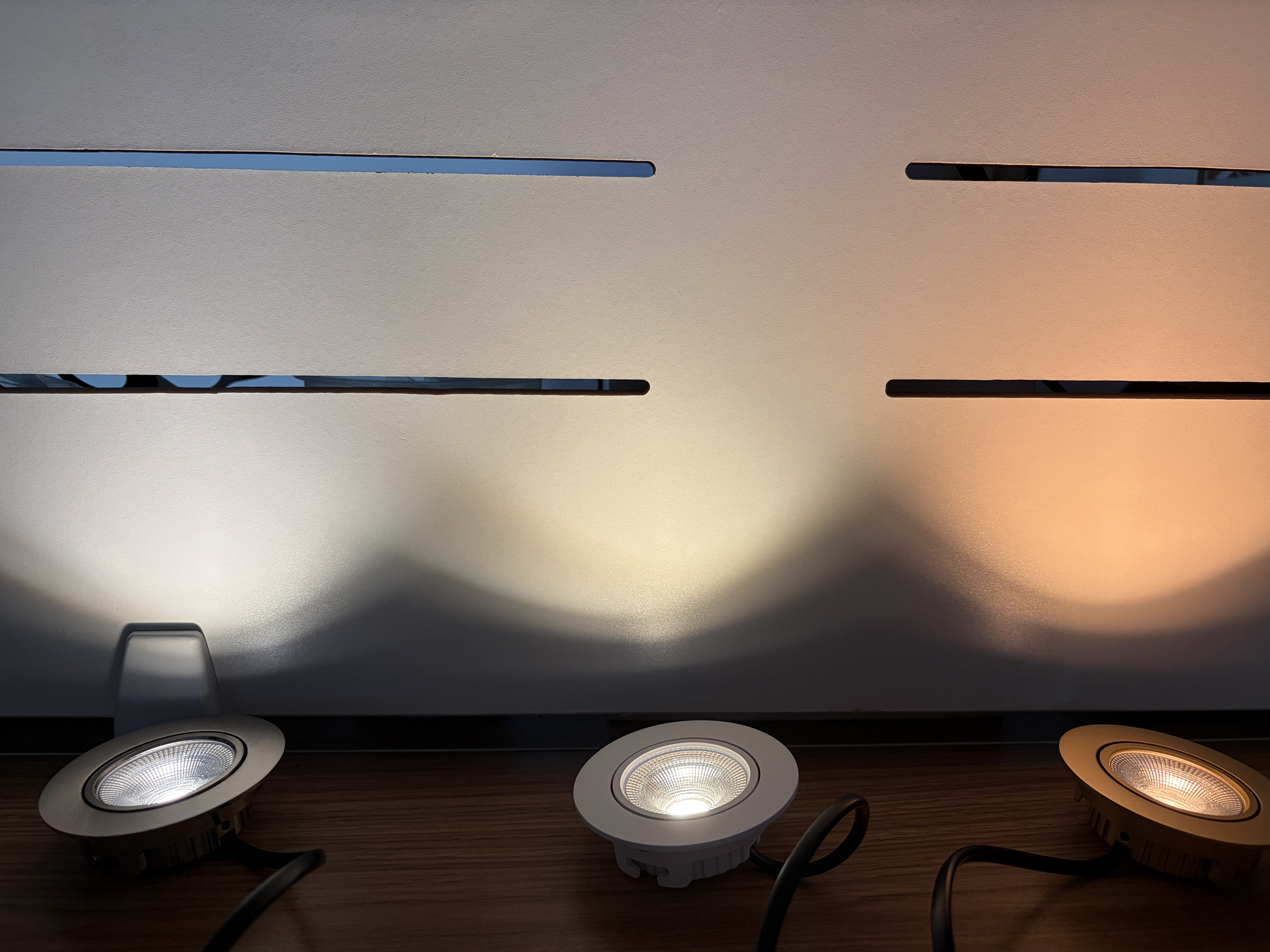
Dim‑to‑warm technology changes both light level and color temperature when dimming, usually from around 3000K or 2700K down to 2200K or lower. This behavior mimics classic halogen or incandescent lamps, which became warmer as they dimmed, and helps create a natural transition from active tasks to restful scenes. In Germany and the Netherlands, dim‑to‑warm recessed spotlights are now widely used in open‑plan spaces that serve several functions across the day. Users can keep higher output and slightly cooler tone when working, then dim down to a soft amber tone for evenings without changing luminaires or control systems. This flexibility supports human‑centric lighting concepts, which seek to align interior light more closely with natural daily rhythms.Dim‑to‑warm in European regulations and practice
EU eco‑design and energy labelling regulations, updated under Regulation (EU) 2019/2020 and related acts, strongly encourage efficient LED solutions, including recessed downlights. Dim‑to‑warm LED spotlights now achieve high lumen‑per‑watt values while still delivering warm light at lower dim levels, replacing older halogen spots that no longer meet efficiency rules. In the Netherlands, the growth of the smart home comfort and lighting segment, projected to reach over 290 million USD by 2025, underlines the shift towards controllable and mood‑based lighting. Dim‑to‑warm recessed spotlights integrate well with smart dimmers and wireless systems, making them a logical choice for homeowners already investing in connected devices.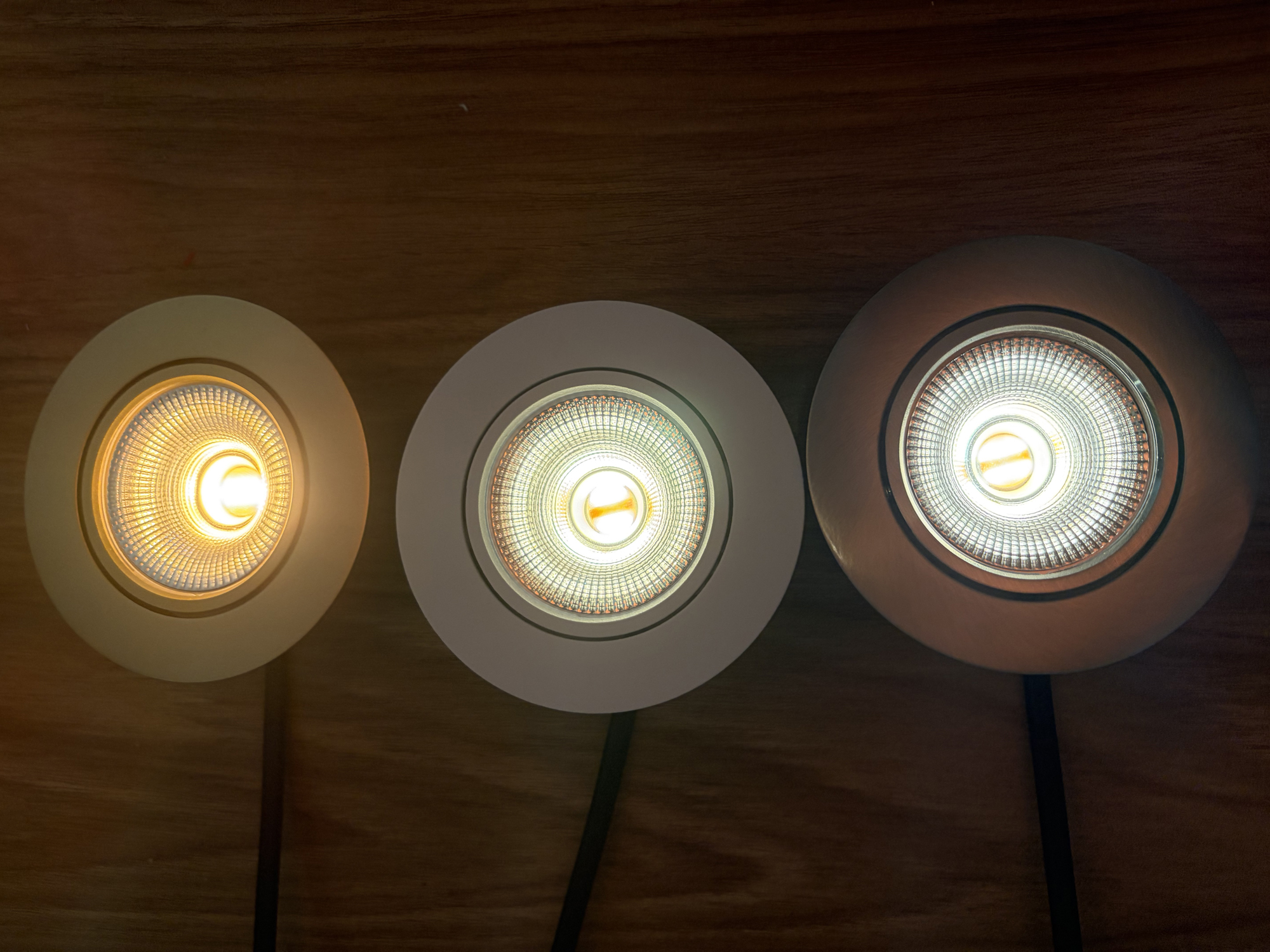
Market Trends in Germany and the Netherlands
Both Germany and the Netherlands have strong building codes, a clear focus on sustainability, and high user expectations for comfort. As a result, recessed downlights and spotlights with 2700K, 3000K, and dim‑to‑warm options have seen steady growth in residential, retail, and light commercial projects since 2022. Statista forecasts that the Dutch comfort and lighting smart home market will grow at over 8 percent CAGR between 2025 and 2029. While this data covers wider smart lighting, it reflects a strong shift toward flexible, controllable solutions, including recessed spotlights that support different scenes and temperatures. In Germany, professional suppliers of recessed spotlights now highlight switchable CCT and tunable white options as mainstream features for both installers and planners.User preferences in Dutch and German homes
Customers in Germany and the Netherlands tend to value energy savings, high color rendering, and clean ceiling appearance over very low product prices. Recessed spotlights are often used with small cut‑outs and slim housings to achieve an understated look, especially in minimalist interiors. From a color point of view, warm white remains the base choice, but many projects now mix 2700K and 3000K in the same dwelling or building. Dim‑to‑warm versions are seen as a premium yet accessible upgrade, especially in living rooms, dining areas, and boutique hotel corridors where ambience drives guest satisfaction.Advantages and Drawbacks of 2700K, 3000K and Dim to Warm
The table below compares key functional aspects of 2700K fixed, 3000K fixed, and dim‑to‑warm recessed spotlights relevant to German and Dutch projects.Key characteristics of warm white and dim‑to‑warm recessed spotlights
| Feature | 2700K fixed recessed spotlight | 3000K fixed recessed spotlight | Dim‑to‑warm recessed spotlight |
|---|---|---|---|
| Typical use in EU homes | Bedrooms, lounges, dining zones for very cosy mood | Kitchens, halls, modern living rooms needing clean warm light | Flexible living areas, hospitality, premium residential where mood changes often |
| Perceived ambience | Very warm, relaxing, similar to classic incandescent at low level | Warm but fresher, often seen as more “modern” and bright | Shifts from neutral‑warm to candle‑like tones when dimmed |
| Energy efficiency | High, with typical LED efficacy over 80 lm/W in EU products | Similar efficiency to 2700K with slightly higher system output | Slightly lower than fixed CCT due to more complex drivers and LEDs |
| Control and wiring | Standard phase‑cut or DALI dimming, simple setup for installers | Same as 2700K, easy retrofit from halogen spots | Requires compatible dimmers; performance depends on correct pairing |
| Installation cost | Usually lowest upfront cost for recessed LED spots | Similar to 2700K; no extra drivers or controls | Higher product cost due to advanced modules and drivers |
| User flexibility | Fixed colour; users must accept one ambience per circuit | Fixed colour; good compromise for many mixed‑use spaces | Very high flexibility, supports several scenes per room with simple dimmer |
Product Features European Buyers Look For
When specifiers and buyers in Germany and the Netherlands choose recessed spotlights, they rarely look at color temperature alone. Instead, they consider a group of technical and visual features that together define comfort, efficiency, and service life in daily use.
Key parameters include lumen output, beam angle, Unified Glare Rating (UGR), color rendering index (CRI), dimming performance, and lifetime backed by robust warranty. In practice, many projects now target CRI 90 or higher and low‑glare optics to protect visual comfort, especially where darker surfaces or artwork are present.
Glare control and beam design
Low‑glare recessed spotlights use deeper reflectors, secondary lenses, or black anti‑glare baffles to reduce direct view of the LED chip. This helps keep UGR below recommended thresholds for residential and hospitality use and avoids eye strain when lights run for many hours.
Beam angle also plays a central role. Narrow beams around 24 degrees are used for accenting art or architectural details, while 36–60 degree beams cover general lighting in living rooms and corridors. In open‑plan spaces, designers often combine several beam angles to balance uniformity and visual interest across walls, tables, and seating areas.
Radians Lighting – Focus on Customised Recessed Spotlights
Radians Lighting positions itself as a specialist in LED downlights and recessed spotlights for international markets, including Europe. The company offers a broad range of downlight categories from mini recessed spots to large commercial models, with options for 2700K, 3000K and switchable CCT. Its portfolio includes recessed, surface‑mounted, trimless and low‑profile downlights, which allows planners to keep a consistent visual language through an entire building. Radians also emphasizes strict quality control from LED selection to thermal design and driver matching, aiming for stable output and long lifetimes that support EU energy label expectations. For projects in Germany and the Netherlands, this approach helps installers comply with both national energy rules and the practical demand for durable recessed spotlights that do not need frequent replacement.Customisation and design support
A key strength of Radians Lighting is its ability to adapt products by wattage, cut‑out size, colour finish, beam angle, and dimming protocol. This allows lighting designers to specify, for example, a 2700K low‑glare downlight with 68 mm cut‑out and DALI dimming, matched across several rooms or even hotel floors. Through its dedicated recessed downlight category, Radians lists options for small cut‑outs from 50 mm up to larger 200 mm diameters, covering both intimate residential spaces and wider commercial ceilings. This range helps European buyers design coordinated schemes that meet local ceiling standards, cavity depths, and insulation practices without compromising appearance. Further information on the company’s LED downlight ranges can be found directly on its official site under the LED downlight category at: LED downlight categoryRadians Lighting Product Lines Relevant to 2700K, 3000K and Dim to Warm
Radians Lighting’s catalog includes several product groups that address the needs of the Dutch and German recessed spotlight market. While each model has its own specifications, the families below illustrate how the brand covers key use cases such as low‑glare living room lighting, compact corridor spots and bathroom solutions.-
- Recessed downlights: A full collection of round and square recessed downlights in various cut‑out sizes, with fixed or adjustable heads, suitable for many residential and commercial spaces.
-
- Mini downlights: 3 W mini recessed spots for tight spaces, shelving or under‑cabinet lighting where small apertures and discreet appearance matter.
-
- Low‑profile and ultra‑slim downlights: Solutions with reduced installation depth for ceilings with limited void height, common in renovations across Germany and the Netherlands.
Ultra-Thin 24mm Downlight — Powerful Performance in Narrow Space.
At Radians Lighting, innovation meets precision once again. Our latest ultra-thin downlight is designed for spaces where every millimeter matters — without compromising light quality or control.
- Ultra-Slim Design (24mm Depth) – Perfect for ultra-low ceilings and compact installations.
- High CRI & High Lumen Output – Experience vivid, true-to-life illumination for premium interior spaces.
- Triac Dimming 0–100% – Smooth, flicker-free dimming performance compatible with modern dimmer systems.
- Flexible Cutout Range (68–75mm) – Designed for easy retrofits and versatile mounting.
- 3-in-1 CCT Switch System (2700K + 3000K + D2W) – Our exclusive new color tuning solution allows instant adjustment to suit any mood or application.
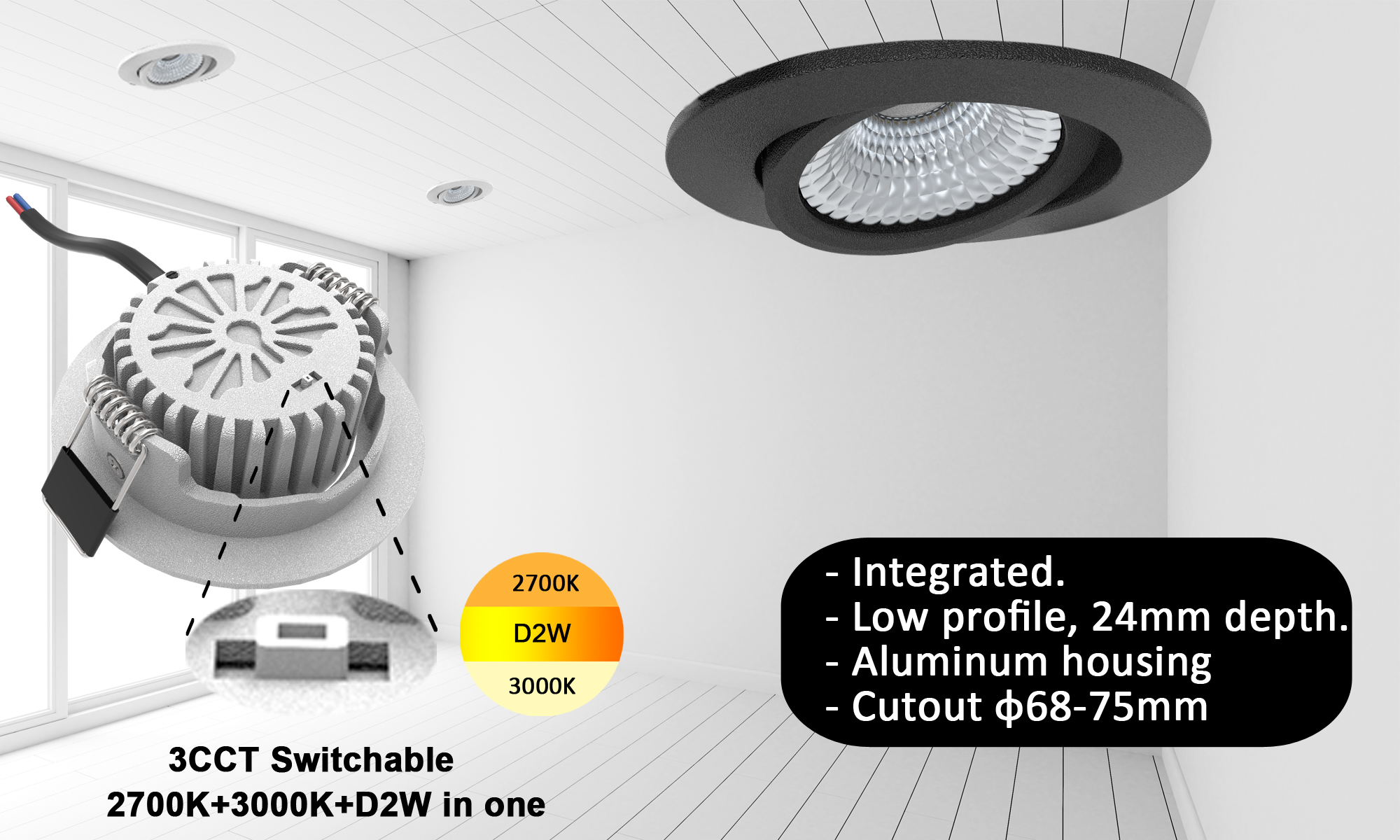
3-IN-1 New Flexible & Ultra-Thin & Deep Downlight
At Radians Lighting, we’re proud to present our latest ultra-thin deep downlight — engineered for exceptional performance, flexible installation and beautiful, true-to-life lighting in the most demanding interiors.
- Ultra-Slim Profile: just 32mm depth, ideal for ultra-low ceilings.
- High CRI & High Lumen Output: accurate color rendering with exceptional brightness.
- Multi-Mounting Options: compatible with German standard junction boxes, plus springs and clip installations.
- Flexible Cutout: fits Ø58–70mm cutouts for broad applicability.
- 3-in-1 CCT (2700K + 3000K + D2W): exclusive new CCT switch system for on-site flexibility.
- Interchangeable Bezel: swap bezels quickly to match interior finishes and color schemes.
New Gyro Recessed Spotlightswith Integrated Drivers
- Fully Adjustable Beam – The gyro design allows you to direct the light freely in any direction, delivering flexibility for architectural and accent lighting.
- Slim Profile (26mm Depth) – Perfect for ultra-low ceiling installations without sacrificing performance.
- Aluminum Housing – Provides excellent heat dissipation and long-lasting reliability.
- Optical Reflector – Creates a smooth, uniform beam with minimal glare for refined visual comfort.
- Integrated Driver Design – Simplifies installation and maintains a clean ceiling aesthetic.
- Advanced Flicker-Free Dimming (1–100%) – Ensures seamless control across all dimming levels.
- 3CCT Switchable (2700K / 3000K / D2W) – Easily adjust color temperature to match any mood or setting.

Example Radians Categories for Warm White and Dim to Warm Applications
The table below outlines several Radians Lighting categories that are particularly relevant for 2700K, 3000K and dim‑to‑warm applications in Germany and the Netherlands.Radians Lighting categories linked to warm white and dim‑to‑warm
| Radians category | Typical application | Key advantages for German and Dutch projects |
|---|---|---|
| Recessed downlight category | General lighting in living rooms, corridors, kitchens and commercial spaces needing clean ceilings | Wide range of sizes, wattages and CCT options, including warm white; supports dimmable drivers and different beam angles |
| Low‑profile downlights and ultra‑slim downlights | Renovations with shallow ceiling voids and limited access spaces | Minimal installation depth, smooth appearance, suitable for modern flat ceilings in Dutch and German apartments |
| Dimmable LED downlights | Rooms where dimming is essential, such as lounges, bedrooms, and restaurants | Designed for stable dimming performance with suitable drivers, a base for warm white and dim‑to‑warm solutions |
| Anti‑glare downlights | Spaces that need high visual comfort, like living rooms, hotel rooms and home offices | Deeper optics and shields reduce direct glare, important for long evening use of warm white lighting |
| Dim‑to‑warm downlights article | Knowledge support for planners and buyers researching dim‑to‑warm recessed solutions | Explains concept and design aspects, helping users integrate dim‑to‑warm into new schemes |
Design Considerations for German and Dutch Interiors
Designers in Germany and the Netherlands tend to approach recessed spotlight planning with a focus on balance, visual comfort, and architectural integration. Instead of flooding ceilings with many small spots, they often use fewer well‑placed luminaires with defined beams and lower glare. Color temperature is chosen according to room function, surface finishes, and user age, as older eyes may prefer slightly higher levels of light. In many projects, warm white 2700K is combined with higher illuminance, rather than switching to cooler color temperatures, to keep spaces both pleasant and visually clear.Harmonising 2700K, 3000K and dim to warm in one project
When 2700K, 3000K and dim‑to‑warm are used in the same building, planners usually define clear zones. For example, circulation and work zones might use 3000K fixed, while seating areas and bedrooms rely on dim‑to‑warm or 2700K fixed, with careful transitions between zones. The most successful schemes align color temperature with material palettes and daylight. Rooms with warm wood flooring and textiles respond well to 2700K, while spaces with cooler stone or concrete may look better at 3000K or at the higher end of a dim‑to‑warm curve.Technical Parameters That Influence User Experience
Beyond color temperature and dimming, several technical parameters shape the day‑to‑day experience of recessed spotlights. In German and Dutch contexts, where users spend long hours indoors during darker months, these details can make a clear difference to comfort and well-being. Important parameters include:-
- CRI and color quality: High CRI improves skin tones and natural materials, especially important at 2700K and dimmed levels.
-
- Flicker performance: Low flicker reduces headaches and visual fatigue, particularly with dim‑to‑warm and smart controls.
-
- Lifetime and warranty: Long claimed lifetimes supported by manufacturer testing align with sustainability expectations and EU eco‑design rules.
Role of controls and smart systems
German and Dutch homes increasingly integrate smart switches, presence detectors and app‑based dimming. Recessed spotlights must therefore be compatible with 230 V European grids, common dimming standards, and, where needed, gateways for smart home systems. Dim‑to‑warm solutions benefit from matched control gear and well‑documented compatibility lists to ensure smooth dimming curves. When planning, it is wise to specify spotlights and controls from vendors who provide clear guidance on this point, as it reduces call‑backs and complaints after installation.Conclusion
2700K, 3000K and dim‑to‑warm recessed spotlights have become core tools for creating comfortable, efficient, and visually coherent lighting schemes in Germany and the Netherlands. Fixed warm white options deliver simple, proven performance, while dim‑to‑warm spotlights add the ability to mirror traditional halogen ambience and support multi‑use rooms with one lighting layout.
For buyers and planners, success depends on looking beyond color temperature alone and weighing glare control, CRI, dimming behavior, energy labels, and compatibility with smart systems against project goals and local regulations. Manufacturers such as Radians Lighting, with broad recessed downlight ranges, customisation capabilities, and clear technical information, are well placed to support Dutch and German projects that seek high visual comfort, reliable efficiency, and a strong balance between design freedom and sustainability.

 English
  Dutch
Dutch  German
  Danish